Pet Urine in Carpet Pad vs. Surface Stains: Why DIY Cleaners Don’t Fix Odor
If the smell keeps coming back after you’ve cleaned the stain, the source may extend beyond the carpet surface.
A rented carpet cleaner or a bottle of enzyme spray can sometimes lift a visible stain from a pet accident in an afternoon. What it may not be able to do is reach contamination that has traveled into the backing or pad underneath. Urine is liquid, and when it penetrates beyond the carpet fibers, it can move downward through the backing and into the pad beneath it.
If you’re dealing with recurring pet odors, our professional carpet cleaning services in Medford, OR can help determine whether the problem is limited to the carpet surface or extends deeper.
Where the Urine Actually Goes
Carpet is a layered system: fiber on top, a woven backing beneath that, and a foam or fiber pad underneath the backing, sitting directly on the subfloor. When urine penetrates the carpet, it can move through these layers. Depending on the amount and location of the accident, contamination may spread into the pad and affect an area larger than the visible surface stain.
This is one reason an odor can become more noticeable when humidity or temperature changes. Lingering residue in the backing or pad may produce a stronger smell even after the surface of the carpet feels dry.
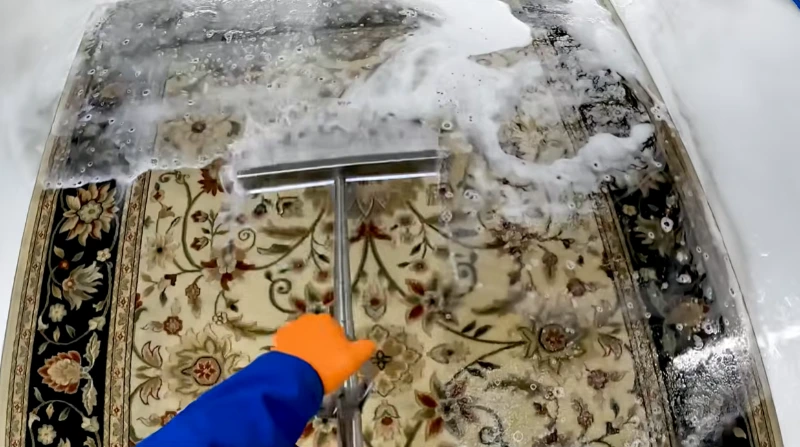
Carpet Has More Than One Layer
A surface stain doesn’t always tell you how far contamination has traveled. The carpet fiber, backing, pad and subfloor can all play a role when urine penetrates beyond the visible area.
Why Surface Cleaning Can Fall Short
- Store-bought extractors may clean the upper carpet fibers without removing contamination that has reached deeper layers.
- Enzyme treatments need to contact the residue they are intended to break down. A surface application may not reach contamination below the backing.
- Repeated scrubbing can spread moisture through the carpet rather than addressing contamination underneath the surface.
How to Tell If It’s Gone Past the Surface
A few signs can point to contamination below the carpet surface rather than a simple surface stain. These signs aren’t proof by themselves, but they can indicate that a deeper inspection is worthwhile.
What Actually Fixes It
Reaching contamination in the pad may require stronger extraction equipment and treatment that is appropriate for the type and depth of the contamination. Hot water extraction with commercial-grade equipment can help remove loosened soil and residue, while an enzyme or other appropriate treatment may be used when suitable for the material and condition.
In cases where contamination has traveled through the carpet and into the pad or subfloor, the affected area may need more direct treatment. In some situations, pad replacement may also be appropriate. The right approach depends on how extensive and deep the contamination is, which is why an inspection is useful before assuming that surface cleaning will solve the problem.
For more general odor situations, our pet urine and odor removal service covers treatment for problems ranging from individual spots to larger affected areas.
Still dealing with recurring pet odor?
A deeper inspection can help determine whether the problem is limited to the surface or extends into the carpet system.
Frequently Asked Questions
Can I just replace the pad myself instead of cleaning?
Replacing a saturated pad section can help in some situations, but if the subfloor underneath has also absorbed urine, a new pad without treating the affected area may not solve the odor. It can be useful to have the full depth checked before deciding what needs to be replaced.
How do I know if it’s reached the subfloor?
Persistent odor after appropriate cleaning, staining that reappears after a pad replacement, or odor that remains noticeable with the carpet lifted can indicate that contamination has traveled beyond the pad. A physical inspection is the best way to determine how far it has gone.
Will a black light show me where the problem is?
A black light can sometimes help locate older accidents that have dried and aren’t obvious to the eye. However, it doesn’t determine how deep the contamination goes or whether a particular area needs treatment. That requires a closer inspection.
Is it cheaper to just replace the carpet?
Not necessarily. In some cases, deep cleaning and targeted pad treatment can be a less disruptive option than replacing the carpet. Whether cleaning is appropriate depends on how extensive and deep the contamination is, along with the condition of the carpet and pad.
Still Smelling It After Cleaning It Yourself?
We can check how deep the contamination goes and recommend an appropriate treatment based on the condition of the carpet, pad and affected area.
Call (541) 627-7626